Food-led travel keeps shaping how people plan trips, and New Zealand is an easy place to build one around. A Travel Weekly guide on culinary travel in the country points to its distinctive producers, wine regions, seafood and Māori influences as the draw. This article turns that idea into a planning method: how to organize a New Zealand trip so that eating and drinking drive the route, not just fill the gaps between sights.
A note on scope: the Travel Weekly piece is a broad guide, and I'm working from its themes rather than a list of specific restaurants or dishes. So you won't find invented menu recommendations here. What you will find is a framework you can use to build your own itinerary, with the research questions that matter.
Start With the Four Pillars
Per Travel Weekly's framing, New Zealand's culinary appeal rests on a handful of things: distinctive producers, wine regions, seafood, and Māori influences. Treat these as the four buckets of your trip. If your itinerary has something from each, you've covered the country's food story rather than just eating well in one city.
A simple test: before you book anything, write the four headings on a page and list one planned experience under each. Empty bucket? Fix it before you go.
Pillar One: Producers and Farm-to-Table
The "distinctive producers" theme is the one most travelers underuse. Restaurants are easy to find. Producers take planning.
- Search by region, not by country. Pick the areas you're already visiting and look for farms, markets and food makers within a short drive.
- Ask where the menu comes from. Farm-to-table dining works best when you ask staff which items are local and in season.
- Leave gaps in your schedule. Producer visits often need advance contact, so check opening hours and booking requirements before you commit.
Pillar Two: Wine Regions
Wine is one of the headline reasons culinary travelers head to New Zealand. Rather than trying to cover several wine areas in a rush, choose one or two and give each real time.
- Plan your driving. Tastings and rental cars don't mix. Book a driver, a tour or a bike option, or designate a non-drinker.
- Pair wine with place. Eat at or near the wineries you visit, so the food and the glass come from the same landscape.
- Taste fewer, talk more. Two or three tastings with real conversation teach you more than six rushed ones.
Pillar Three: Seafood
Seafood is named in the Travel Weekly guide as part of the country's culinary identity. For a trip, that means building in coastal stops and eating what's local to that stretch of coast.
- Eat seafood where you can see the water. Coastal towns and harbor-side spots are the natural places to start.
- Ask what's fresh today. Daily specials beat fixed menus when you want the best of the catch.
- Mix casual and sit-down. A quick, informal meal and one proper dinner will show you two different sides of the same ingredients.
Pillar Four: Māori Food Traditions
The Māori influence on Kiwi cuisine is one of the most meaningful parts of a culinary trip, and it deserves more than a passing mention on a menu. Treat it as cultural context, not a novelty.
- Seek out Māori-led experiences. Look for food experiences hosted or guided by Māori people, so the stories come from those who hold them.
- Learn before you go. Spend an hour reading about how Māori traditions inform New Zealand food. You'll order and ask better questions.
- Go with respect. Follow the guidance of your hosts on customs and etiquette.
Turn the Pillars Into a Route
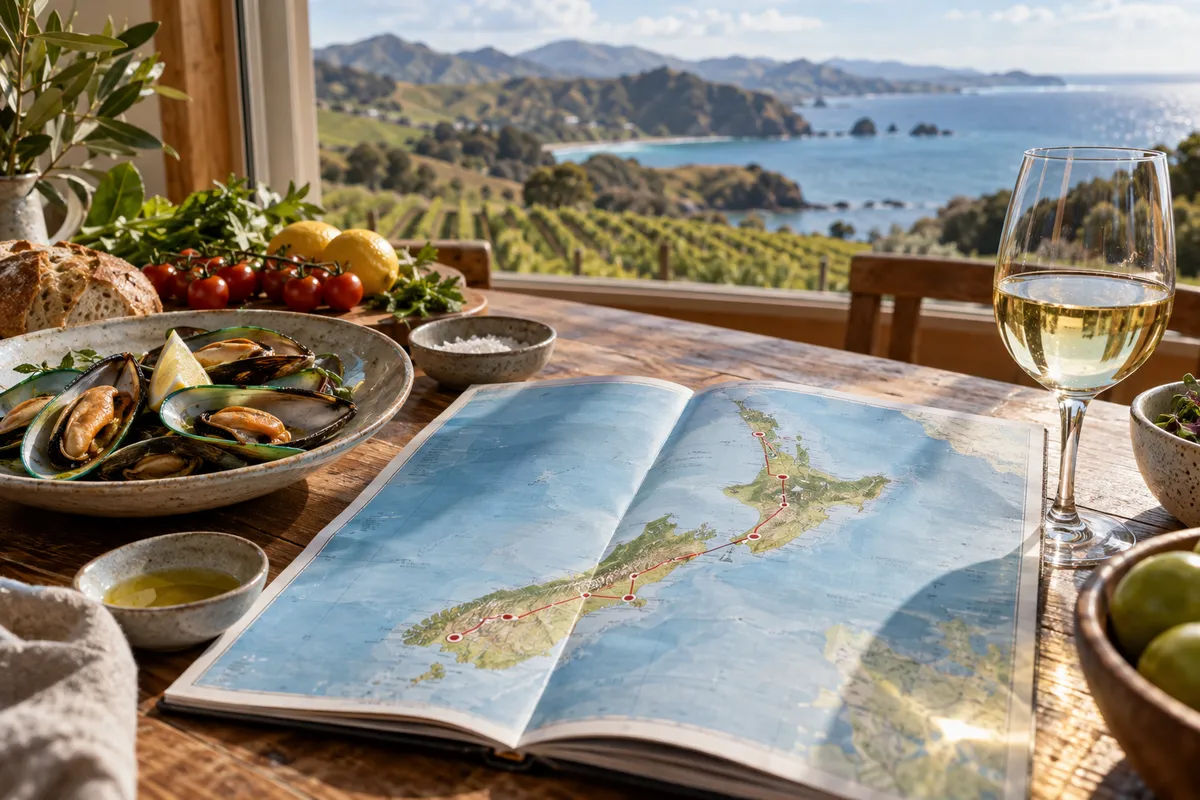
One of the angles worth pursuing is a culinary road trip across the country. Here's how to build one without overpacking it.
- Pick your anchor regions. Choose one area known for wine, one for seafood, and one with strong producer or farm-to-table options.
- Place your Māori experience early. Doing it near the start gives context to everything you eat afterward.
- Cap your daily driving. Food travel needs slack: time for a market stop, a long lunch, an unplanned detour.
- Book anchor meals, leave the rest open. Reserve one or two key meals, then stay flexible for local tips you pick up along the way.
- Eat the local thing. In each place, ask someone who lives there what to order. It's the most reliable Kiwi-style shortcut there is.
What to Pack and Prepare
- A small cooler bag for market and producer finds, where permitted.
- A running list of recommendations from locals, kept in your phone.
- Your dietary needs written down clearly, so you can share them with hosts and producers.
- Check New Zealand's rules on bringing food items in and out of the country before you travel.
The Takeaway
Before you book a single flight or room, write down your four pillars and attach one real experience to each. A trip built that way will taste like New Zealand, not like a generic holiday that happened to include dinner.