On Oct. 17, an American Airlines flight from St. Louis to Philadelphia made an emergency landing back at St. Louis airport after passengers reported a strange odor. According to Fox News, travelers also described mechanical concerns, a jolt, a drop, and oxygen masks deploying. The headline quoted passengers saying, "We're going to die."
You probably can't prevent a moment like that. You can, though, know what to do in it, and how to separate a terrifying sensation from actual danger. That's what this guide covers.
A caveat first: the details below about the incident come from Fox News' reporting of passenger accounts. I don't have an official cause, so this piece doesn't guess at one. What follows is practical advice for your own seat, not a diagnosis of that flight.
What Passengers Reported
Per Fox News, the sequence passengers described was unsettling: an unusual smell, concern about the aircraft's mechanical condition, a jolt, a drop, then oxygen masks dropping from the ceiling. The plane then returned and landed at St. Louis.
The report also included expert context making an important point: delays and emergency procedures do not automatically mean a flight is unsafe. An emergency landing, in other words, can be the safety system doing its job.
If You Smell Something Odd
A strange odor is one of the more alarming cues because you can't see its source. Here's a sensible way to handle it:
- Tell a flight attendant right away. Don't assume someone else has. Crew can only act on what they know, and a second report helps confirm a pattern.
- Be specific. Say what it smells like and where you are in the cabin. "Burning near row 22" is far more useful than "something smells weird."
- Stay seated and follow crew instructions. Moving around can get in the way of the people trying to assess the situation.
I can't tell you from the reporting what caused the odor on this flight. The point is that reporting it early is the one useful thing you control.
If the Oxygen Masks Drop
Seeing masks fall is jarring, and it's easy to freeze. A few habits help:
- Pull the nearest mask toward you and put it on. Do this before anything else, including helping others.
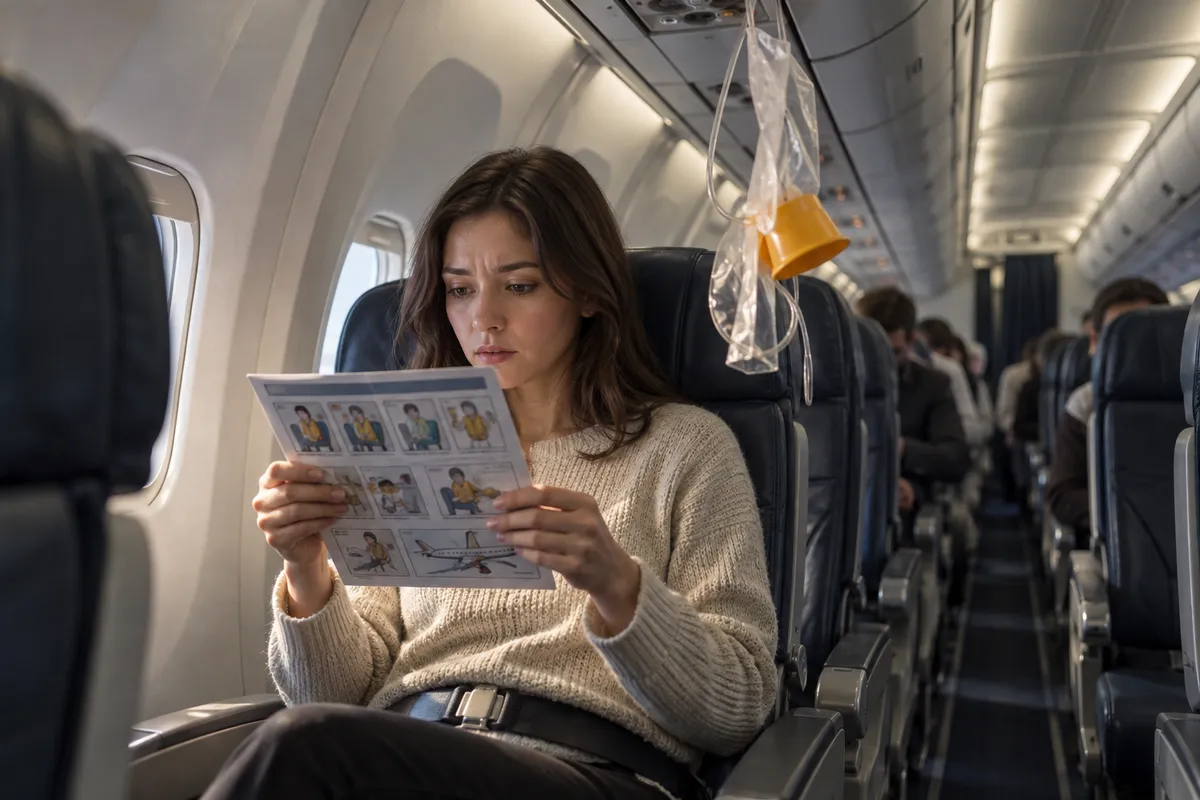
- Cover your nose and mouth and breathe normally. Even if the bag doesn't visibly inflate, follow the crew's instructions and the safety card.
- Listen for announcements. Crew will tell you what's happening and what to do next.
You can prepare for this in about 30 seconds: when the safety demo plays, watch it once, and glance at the card in the seat pocket. Most of us tune it out. The one time it matters, you'll be glad you didn't.
If the Plane Jolts or Drops
A sudden drop feels catastrophic in your stomach long before it's anything else. Two things reduce your risk regardless of the cause:
- Keep your seat belt fastened whenever you're seated. Loosely buckled, low across your hips, is the habit to build.
- Keep loose items stowed. A laptop or water bottle on your tray table becomes a hazard in a sudden movement.
Passengers on the St. Louis flight described a jolt and a drop, per Fox News. Those sensations are frightening, but they're also exactly why the seat belt rule exists.
What an Emergency Landing Actually Means
The phrase sounds like disaster. In practice, it generally means the crew has decided to get the aircraft on the ground sooner than planned, and the airport is prepared to receive it. Returning to the departure airport, as this flight did, is a common-sense option when a problem appears soon after takeoff.
The expert context in the Fox News piece makes the same broad point: emergency procedures and delays are not proof that a flight is unsafe. If anything, a crew that acts early and lands is showing caution.
What you can do during the descent:
- Follow every crew instruction, even if it seems minor.
- Secure your belongings and keep your seat belt on.
- Brace if told to, and stay in your seat until you're told otherwise.
- Leave your bags behind if you're told to evacuate. Retrieving them slows everyone down.
A Nervous Flyer's Toolkit
Fear is real even when the risk is low, so give yourself tools:
- Know your cues. Learn what the safety demo covers, so a mask dropping is an instruction, not a shock.
- Slow your breathing. Breathe in for four counts and out for six. It's a simple way to calm your body when your mind is racing.
- Pay attention to the crew. Calm, practiced flight attendants are useful data. Their routine is your reassurance.
- Don't doom-scroll or live-post first. Passengers increasingly share frightening moments in real time, but your attention belongs on instructions, not your feed. Film later.
After a Scary Flight
If your flight diverts or lands early, expect delays. Ask the airline about rebooking at the gate or through its app, and keep your boarding pass and receipts. It's also fine to feel shaken afterward. Talking it through with someone helps, and so does giving yourself a day before the next trip.
The Takeaway
You can't control the cabin, but you can control your preparation. Next time you board, watch the safety demo once, check where your nearest exit is, and keep your seat belt fastened. That's about two minutes of effort for a lot of calm if something unexpected happens.
Source: Fox News reporting on the Oct. 17 American Airlines incident.