Real Simple recently published a piece on why its writer plans every vacation around food, paired with nine tricks for making trips more delicious and memorable. The source's full list of nine isn't something I can reproduce here, so I won't pretend to. What I can do is take its central idea, that food should be the anchor of your plans rather than an afterthought, and show you how to make that work in practice without a spreadsheet of reservations or a blown budget.
By the end, you'll have a simple method for building a food-first itinerary that leaves room for surprise.
Start With the Dish, Not the Sight
Most trip planning begins with landmarks, and meals get squeezed in around them. Flip that. Before you book anything, ask what this place is known for eating. Every region has a few specialties: a bread, a stew, a street snack, a pastry, a local way of doing breakfast.
Write down three to five of these. That short list becomes your skeleton. Sightseeing then fills the gaps between meals instead of the other way around.
The payoff is a trip that feels specific to where you are. Travelers increasingly want experiences that feel personal and local rather than a checklist of sights, and food is one of the easiest doors into that.
Anchor One Meal a Day, Leave the Rest Open
The fastest way to make food-led travel feel stressful is to plan every bite. Don't. Pick one anchor meal per day, whether that's a lunch you've researched or a dinner you've booked, and treat everything else as flexible.
A workable rhythm:
- One planned meal: the place you really want to try, reserved if it takes bookings.
- One loose meal: a market stall, bakery or café you stumble on near wherever you happen to be.
- One free slot: a snack, coffee or drink with no agenda.
This keeps the day from becoming a string of appointments, and it protects the chance of a great unplanned discovery.
Use Markets and Bakeries as Your Cheap Wins
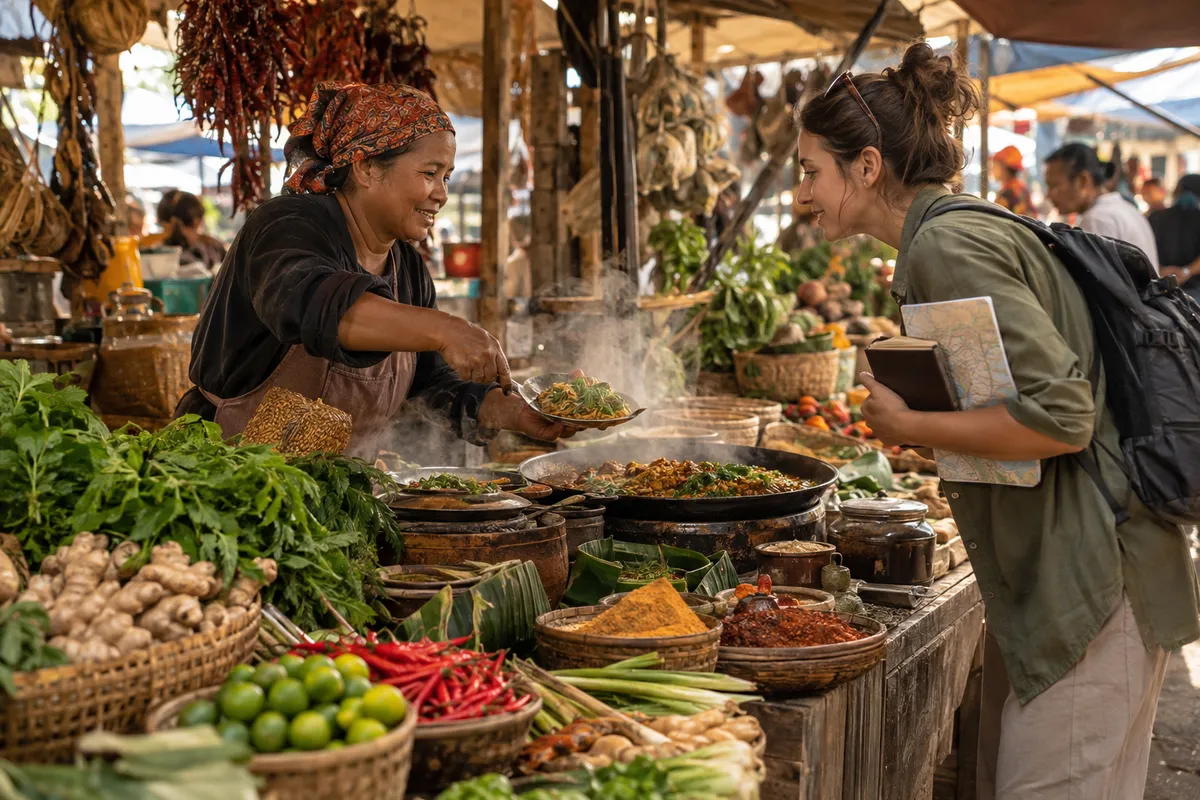
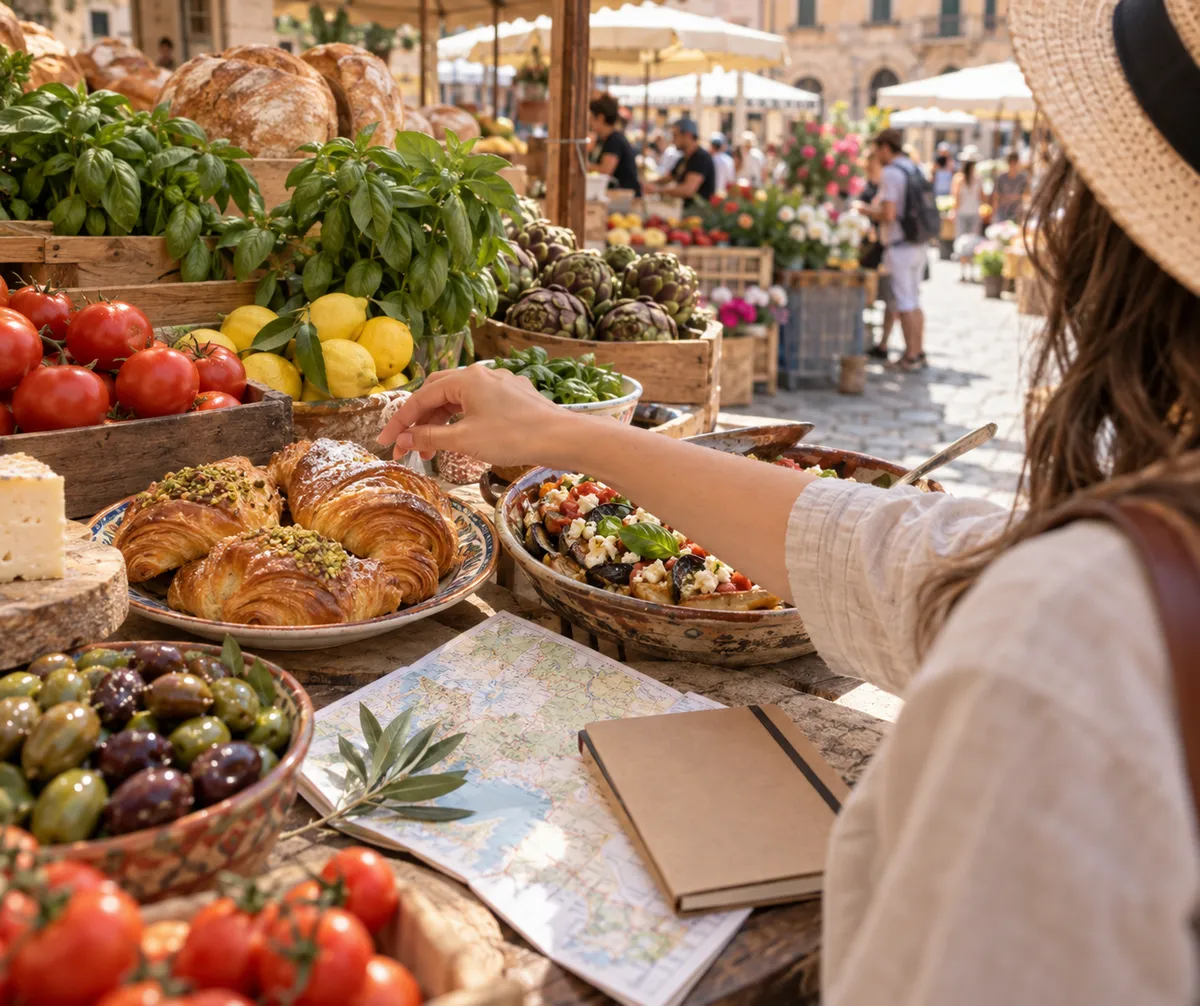
Food-first travel doesn't have to mean expensive tasting menus. Markets, bakeries and regional specialty counters let you taste a place for a fraction of the price of a sit-down dinner.
Build a market or bakery visit into your first morning in a new place. You'll get an instant read on what's in season, what locals buy and what you want to eat again before you leave. It also makes a good low-cost lunch: assemble a picnic and eat it somewhere with a view.
How to Find Local Restaurants (and Dodge Tourist Traps)
Tourist-trap meals tend to share some habits, and you can spot them with a little practice.
Walk a few blocks away from the main attraction
Restaurants right beside a major landmark are catering to people who won't return. A short walk in any direction often changes the crowd, the prices and the quality.
Check who's eating there
If the room is full of locals at normal local mealtimes, that's a good sign. If the staff are stationed outside persuading passersby, keep walking.
Be wary of sprawling menus
A menu that covers every cuisine in every language usually means nothing is done especially well. A short menu built around regional dishes is generally a better bet.
Ask a person, not just an app
Ask your hotel host, a shopkeeper or a market vendor where they'd eat on their day off. A specific recommendation beats a generic star rating, and it gives you a small story to take home.
Do a Little Homework Before You Go
A bit of prep goes a long way, and it doesn't have to be long.
- Save a short list: pin three to five restaurants, bakeries or markets on a map so you can see what's near wherever you end up.
- Book only the essentials: reserve the one or two places where walk-ins are unlikely to work.
- Learn a few menu words: knowing the names of your target dishes makes ordering easier and often earns a friendlier reception.
- Note opening hours: many markets and bakeries are morning places, so check when they close before you plan around them.
Keep It Memorable, Not Just Full
The aim of food-led travel is memory, not volume. Part of that comes from rituals: the same café each morning, an evening aperitivo-style pause, a regional dessert you finally try on the last night. Repeating a small ritual in a new place makes it feel less like a visit and more like a few days of living there.
A small habit helps too. Jot down the name of each dish you loved and where you had it. Months later, that list will do more to bring the trip back than most of your photos.
Keep Costs in Check
You can eat well without overspending if you balance the high and low.
- Pair one special meal with cheaper market, bakery or street food meals.
- Make lunch your main restaurant meal if it's cheaper than dinner where you're going.
- Share dishes so you can taste more for less.
None of this requires strict rules. It's about deciding where a splurge is worth it and letting the simple stuff carry the rest.
Your First Step
Before your next trip, write down the three dishes you'd regret missing, then plan one day around the first. Everything else can stay flexible.