
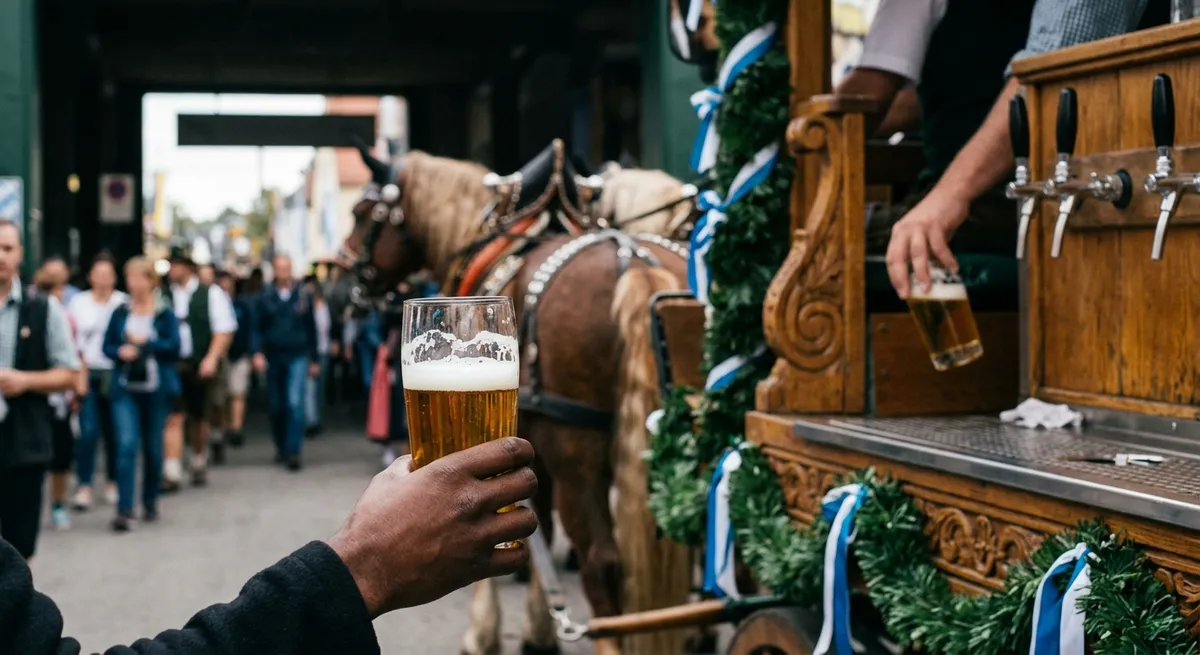
A beer at home is a beer. A beer in Munich during Oktoberfest is a story you tell for years. If you've ever wondered why the same drink feels different when you taste it where it's made, there's a name for the effect: provenance. And once you understand it, you can plan trips that deliver far more than a generic sightseeing loop.
This guide walks you through what provenance means for travelers, why it's driving culinary travel, and how to build a trip around it.
What provenance actually means on a trip
Provenance is where something is made, who makes it, and the culture around it. That's how Forbes frames it in a recent piece on the "Oktoberfest effect," which looks at travelers seeking food and drink tied to place, from Munich's Oktoberfest to whisky tourism in Scotland.
Forbes' core argument is that provenance adds value, authenticity, and emotional pull. In practical terms, that gives you three things to look for at any destination:
- The place: the region, city, or landscape the product comes from.
- The people: the makers, servers, and locals who carry the craft.
- The culture: the rituals, settings, and traditions around eating or drinking it.
If a trip gives you all three, you're traveling for taste, not just snacking on vacation.
Why Oktoberfest is the blueprint
Oktoberfest works as an example because the drink is only part of the draw. You go to Munich for the beer, but you stay for the setting and the shared tradition. Forbes points to it as a model of experience-led tourism: the product becomes a reason to travel because the place and its customs wrap around it.
That's a useful test for your own planning. Ask whether the thing you want to taste has an experience attached that you can't pack in a suitcase. If it does, it's worth a trip.
Scotland's whisky trail: the same logic, different pour
Scotland's whisky tourism follows the same pattern, per Forbes. Whisky is available in nearly any bar in the world. But tasting it in the country where it's made turns a bottle into a destination, with the landscape and local traditions doing the heavy lifting.
If you're drawn to this kind of trip, the planning mindset is simple: pick the product first, then let it lead you to the region.
How to plan a "traveling for taste" trip
Here's a doable way to turn the idea into an itinerary.
1. Start with one food or drink you already love
Choose something specific, like a beer, a whisky, or a regional dish. Specificity gives your trip a spine, and it makes research easier.
2. Find where it's actually from
Look for the origin region, not just the famous brand name. The point of provenance is the connection between product and place, so the closer you get to the source, the stronger the payoff.
3. Look for the culture around it
Check for festivals, traditional venues, and local customs tied to the product. Oktoberfest is the extreme version, but even a small regional tradition can anchor a day.
4. Build the rest of the trip around it
Add the surrounding sights, meals, and neighborhoods once your anchor is set. The food or drink gives the itinerary a theme, so you're not chasing random attractions.
5. Talk to the people who make or serve it
Provenance includes who makes something. Ask questions, listen to the origin story, and let the local explanation shape how you taste.
Why this trend is growing
Per Forbes, culinary travel is booming as people look for more meaningful, place-based experiences instead of generic tourism. At the same time, brands, regions, and creators are leaning into origin stories to stand out in crowded food, drink, and travel markets.
That has a side effect worth knowing about. Because origin stories sell, some will be told more convincingly than they are true. My take: treat a good story as a starting point, then check it by seeing the place, meeting the people, and tasting the difference yourself.
Why it feels more premium
This part is analysis, not reporting. When you taste something at the source, you're getting context along with flavor: the setting, the sounds, the conversation. That context sticks in memory, which is likely why the same product can feel more special on location than on your kitchen counter. It's also why you'll find yourself buying a bottle or a souvenir afterward, hoping to carry a piece of that moment home.
The takeaway
Pick one thing you love to eat or drink, find out where it comes from, and book the trip to go taste it there. Let the product choose the destination, and the itinerary will mostly write itself.